

Last updated: Jun 16, 2026
For many teenagers, acne affects far more than the skin; it shapes how you see yourself. A sudden breakout before a school presentation, a class photo, or a first date can feel distressing, especially at an age when confidence is still forming. Teenage acne is extremely common, and although the frustration and self-consciousness it brings feel deeply personal, it usually responds well to the right treatment.
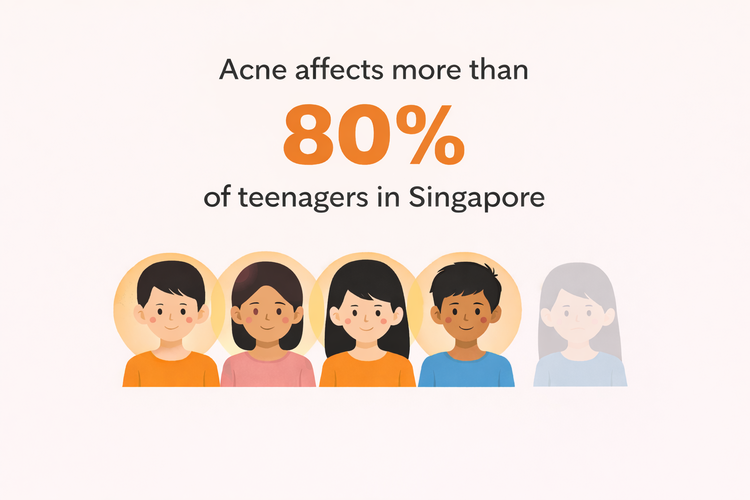
Acne is one of the most common skin concerns among adolescents, affecting more than 80% of teenagers.
Breakouts during the teenage years can vary significantly in type, severity, and duration.
Some experience only occasional spots, while others develop persistent breakouts that may
increase the risk of permanent
scarring without appropriate management.
Read on to learn more about the causes of teenage acne and what you can do to help manage it
while maintaining your confidence!
What Causes Acne in Teenagers?
Acne forms when excess oil mixes with dead skin cells inside the hair follicle, creating a blockage
that traps bacteria beneath the surface and triggers an immune response that leads to inflammation.
This inflammation causes redness, swelling, tenderness, and even pus formation.
Several factors make this process more likely during adolescence, including hormonal
changes, genetic predisposition, and increased skin sensitivity to inflammation.
Hormonal Changes During Puberty
Hormonal fluctuations during puberty are the main reason acne becomes
more common in teenagers. Androgen levels rise in both boys and girls, enlarging the
sebaceous glands and increasing oil production.
Boys often develop more severe acne due to higher testosterone levels, while girls may
experience breakouts that flare in line with their menstrual cycle.
Genetics
Genetics influences how strongly the skin responds to hormonal changes and how active the sebaceous glands are. Teenagers with a family history of acne are more likely to develop persistent or more severe breakouts due to inherited differences in oil production and inflammatory response.
Stress
Stress does not directly cause acne, but it can make existing breakouts worse. Heightened cortisol levels increase oil production and inflammation, which is why many teenagers notice their skin flaring during exam periods, disrupted sleep, or times of emotional pressure.
What Does Teenage Acne Look Like?
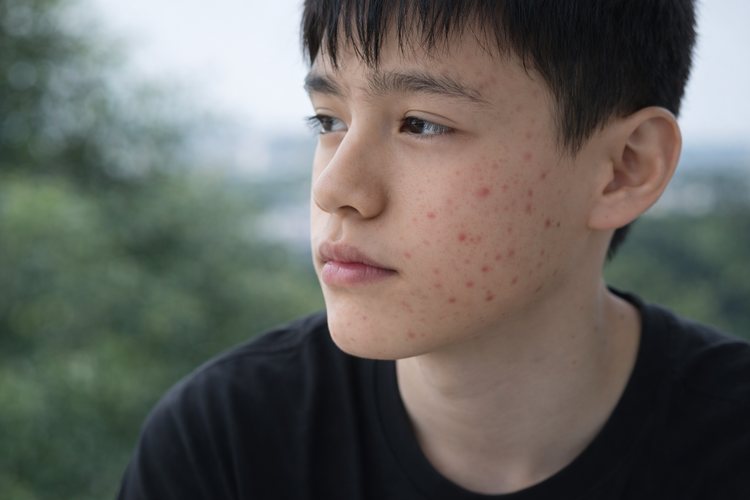
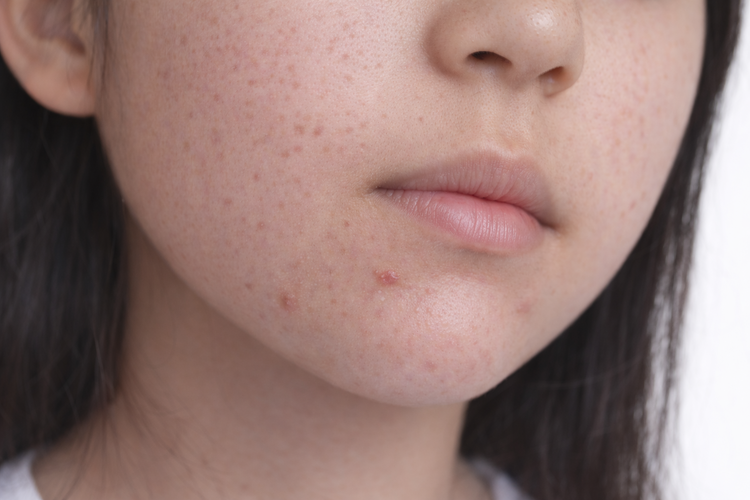
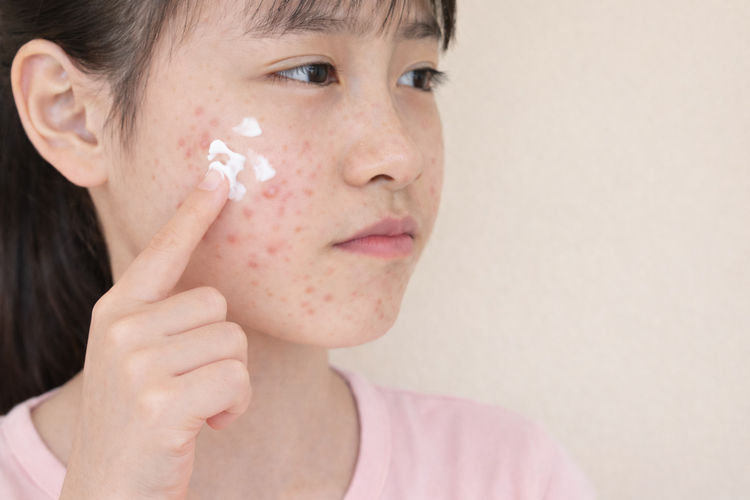
Teenage acne usually presents as a mix of clogged pores and inflammatory breakouts.
Many teenagers develop blackheads and whiteheads, while others experience red, swollen pimples. In
more severe cases, deeper nodular or cystic lesions can form, which
are more painful and carry a higher risk of scarring.
Breakouts most commonly appear on the forehead, nose, and chin, known as the T-zone, where oil
glands are more concentrated. The cheeks are also frequently affected, and in boys, acne may extend
to the back and chest due to higher
androgen levels. Some teenagers notice breakouts along the hairline or scalp, especially when sweat,
hair products, or friction contribute to pore blockage.
Teenage Acne vs Adult Acne
Teenage acne and adult acne develop through the same process but differ in their triggers, location, and how they respond to treatment.
| Feature | Teenage Acne | Adult Acne |
|---|---|---|
| Primary trigger | Puberty-related androgen increase | Hormonal fluctuations, stress, lifestyle factors |
| Typical age of onset | 12 to 19, sometimes earlier | 20s to 40s |
| Common locations | Forehead, nose, chin, cheeks | Jawline, chin, lower cheeks |
| Predominant pattern | Mix of clogged pores and inflamed pimples | More inflammatory, often deeper lesions |
| Oil production | Increased across most of the face | Often localised |
| Duration | Often improves by late adolescence | May persist or recur for years |
How Long Does Adolescent Acne Last?
Adolescent acne commonly begins in early puberty, often between 12 and 14 years of
age, although it can start earlier in some individuals. It often improves by the late
teens or early to mid twenties, but the duration varies.
Mild acne may settle within months with consistent care, while moderate to severe acne can persist
for several years and may continue into adulthood without appropriate treatment.
WhatsApp Us Now
Acne Treatment Options for Teenagers
Treatment depends on the type and severity of acne, ranging from over-the-counter products for mild breakouts to prescription medications for more persistent or severe cases. Options may include:
- Over-the-counter treatments – For mild acne, products containing ingredients such as benzoyl peroxide or salicylic acid can help reduce clogged pores, control bacteria, and calm inflammation.
- Topical prescription medications – When breakouts are moderate or do not improve with basic skincare, doctors may prescribe an acne cream or medication, such as topical retinoids or antibiotics, to regulate skin cell turnover and reduce inflammatory lesions.
- Oral medications – For more persistent or widespread acne, short courses of oral antibiotics may be considered to control inflammation. Hormonal therapy may be considered for teenage girls with cycle-related breakouts. Oral retinoids may be prescribed for the more severe cases, where scarring risks are much higher.
- In-clinic treatments – Procedures such as chemical peels or light-based therapies may complement medical treatment by improving pore congestion and reducing inflammation.
How to Reduce and Prevent Acne for Teens
Teenage acne can be reduced and better controlled with a consistent skincare routine, healthy daily habits, and early management of persistent breakouts.
- Follow a simple, consistent skincare routine – Cleanse gently twice daily with an acne cleanser, use a lightweight non-comedogenic moisturiser, and apply a non-comedogenic sunscreen when needed.
- Avoid picking or squeezing spots – Manipulating breakouts increases inflammation and significantly raises the risk of permanent scarring.
- Choose non-comedogenic products – Heavy or oil-based cosmetics and hair products can clog pores, particularly along the forehead, hairline, and scalp.
- Maintain a balanced diet – High-glycaemic foods and excessive dairy may aggravate acne in some teenagers. A balanced diet supports overall skin health.
Persistent or worsening acne may require medical treatment. Seeking early assessment helps control inflammation and reduce the likelihood of long-term scarring.
Price of Acne Treatment
At Medical Aesthetics, we provide personalised consultations and tailored acne treatment for teenagers. Pricing is as follows:
| Treatment | Price* |
|---|---|
| Consultation | From $38.15 to $70.85 |
| Retinoid | From $21.80 |
| Benzoyl Peroxide | From $32.70 |
| Antibiotic Gel | From $38.15 |
| Cortisone Injection | From $109 |
| Oral Antibiotics | From $2.40 / tablet |
| Chemical Peel | From $114.45 |
| LED Light Treatment | From $87.20 |
| Fractional CO2 Laser | From $436 |
| Laser Soft Peel | From $436 |
*Prices are NETT and inclusive of GST.
All patients are required to undergo a consultation with our doctor to assess his or her
suitability for the relevant treatment(s).
— Dr Robert Ong
Where to Find Acne Treatment for Teens in Singapore?
Book Teen Acne Treatment
Book Now
Enquire More Through Email
Email Us Now
Enquire More Through WhatsApp
WhatsApp Us Now
The Medical Aesthetics Track Record
Patients Consulted Since 2002
Years of Experience
Google Reviews
Experienced & Friendly Doctor
Dr Robert Ong listens attentively to your concerns and patiently discusses with you the appropriate treatment options, based on over 20 years of medical and aesthetics experience.
Affordable Treatments
We are priced competitively and affordably. We also have a variety of treatment options depending on your budget and requirements.
Safe & Effective Results
Our treatment options are safe, effective and promotes natural healing for your skin. We strive to keep your experience a comfortable one and will minimise any pain or discomfort, if any.